
Small Business Health Insurance: Average Costs, Top Plans, and Employer Tax Credits
Diving into the realm of Small Business Health Insurance: Average Costs, Top Plans, and Employer Tax Credits, this introduction sets the stage for a comprehensive exploration of the subject matter. It delves into the significance of health insurance for both employers and employees, shedding light on the benefits and statistics that underline its importance.

Small business health insurance is a type of health coverage offered by employers to their employees. It plays a crucial role in attracting and retaining top talent, as well as promoting the overall well-being of the workforce. Providing health insurance for small businesses offers several key benefits, including:
According to data from the Kaiser Family Foundation, around 47% of small businesses in the United States offer health insurance to their employees. This highlights the importance of small business health insurance in today’s competitive job market.
Small business health insurance premiums can vary depending on several factors. On average, the cost of providing health insurance for employees in a small business can range from a few hundred to over a thousand dollars per employee per month.
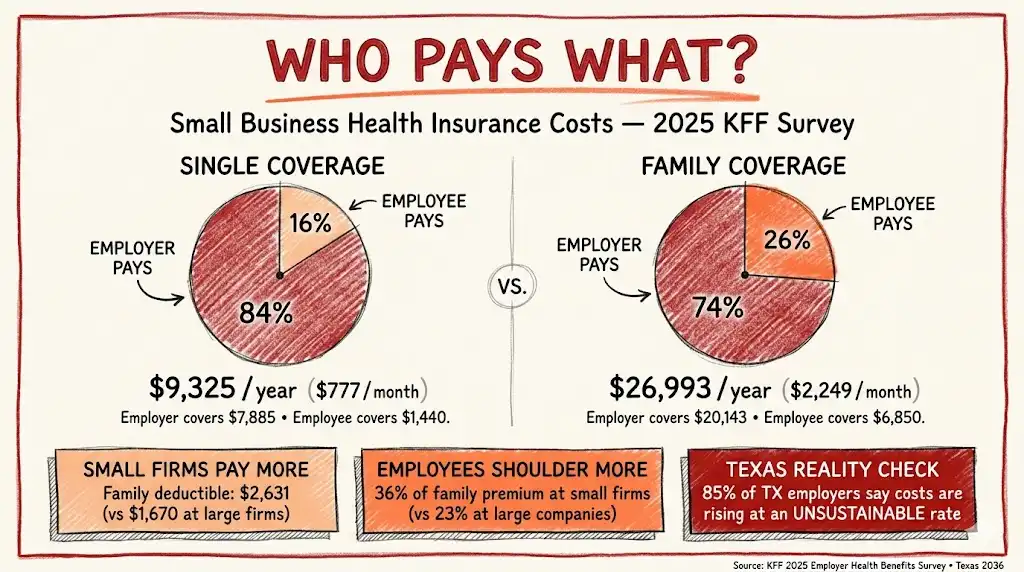
When it comes to choosing health insurance plans for your small business, it’s essential to consider the top options available. These plans offer a range of features and coverage options to meet the needs of both employers and employees.
A PPO plan allows employees to visit any healthcare provider, but offers lower costs for services from providers within the plan’s network. This flexibility is a key benefit for employees who want more choice in their healthcare providers.
With an HMO plan, employees are required to choose a primary care physician from the plan’s network. Referrals are needed to see specialists, but costs are typically lower compared to other plans. HMOs are known for their emphasis on preventive care.
An HDHP paired with an HSA allows employees to save pre-tax dollars for medical expenses. While the deductible is higher, premiums are generally lower. The HSA can be used to cover qualified medical expenses, providing a tax-advantaged way to save for healthcare costs.
Employer tax credits play a crucial role in helping small businesses provide health insurance to their employees. These credits offer financial incentives to employers, making it more affordable for them to offer quality healthcare coverage.
In order to qualify for employer tax credits, small businesses must meet certain criteria set by the government. This includes having fewer than 25 full-time equivalent employees with average annual wages below a certain threshold.
By taking advantage of employer tax credits, small businesses can benefit from significant savings and financial incentives.
What are the eligibility criteria for small businesses to qualify for employer tax credits?
Small businesses must meet certain requirements such as having less than 25 full-time equivalent employees with average annual wages below a specific threshold.
What factors influence the average costs of small business health insurance?
Factors like the age and health status of employees, location, coverage options, and the chosen insurance provider can impact the average costs of health insurance for small businesses.
Which top health insurance plans are commonly recommended for small businesses?
Some of the top health insurance plans for small businesses include Blue Cross Blue Shield, UnitedHealthcare, and Aetna, known for their comprehensive coverage and network of healthcare providers.